Find your
starting point.
Identify the parts of your routine that feel most difficult. Get curious about your everyday energy drains.
SMALL STEPS. MORE ROOM TO BREATHE.
A practical way to make your daily routine more manageable—without another overwhelming self-improvement plan.
Get the complete playbookDigital PDF · One-time purchase · Yours to revisit
Take a look inside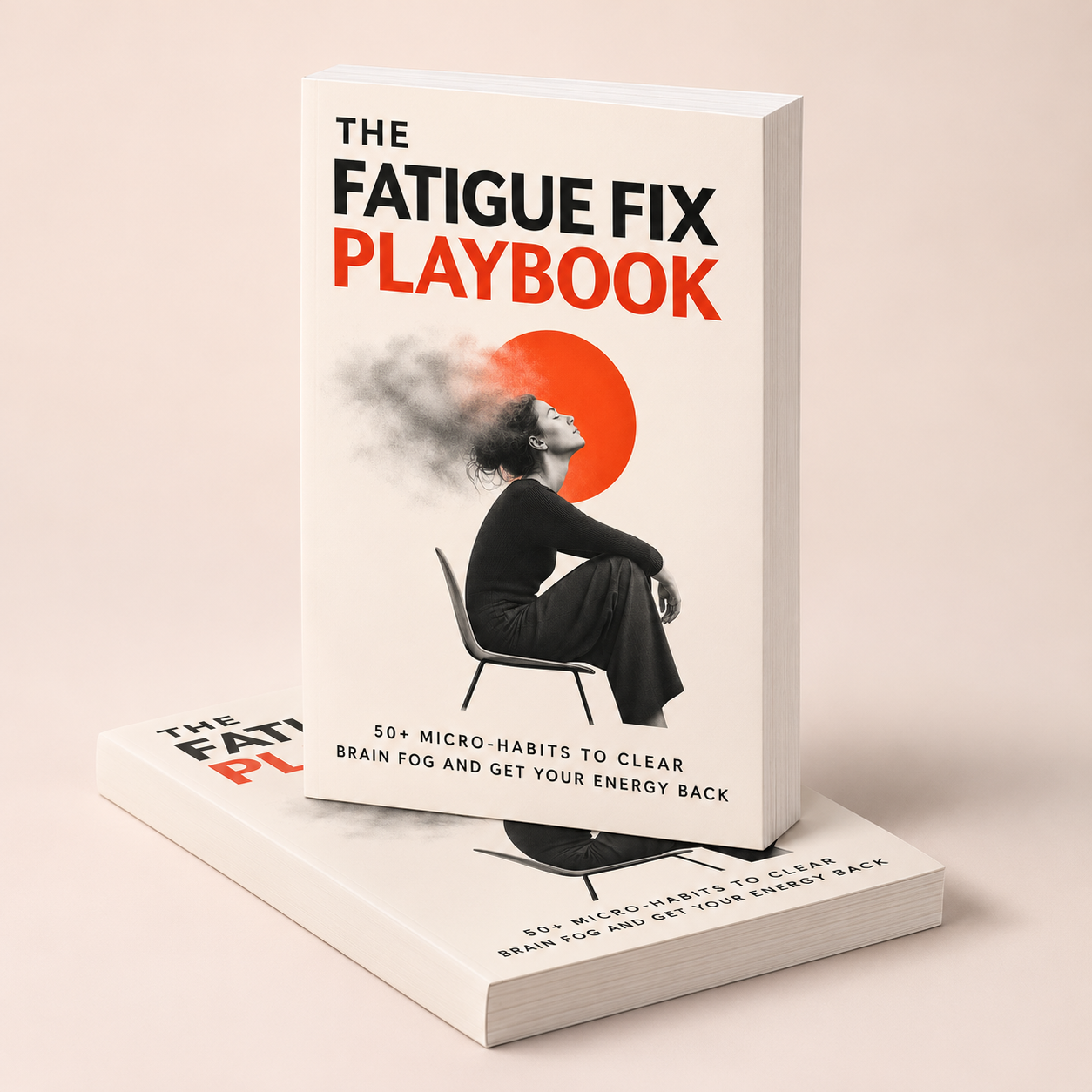
Digital guide. Book mockup shown for illustration.
SOUND FAMILIAR?
You open your laptop to answer an email. You read the first sentence. Then read it again.
You know what you need to do, but getting started feels strangely difficult. By lunchtime, your attention is scattered. By evening, even simple decisions can feel like one thing too many.
Maybe you’ve tried going to bed earlier, drinking more coffee, downloading a productivity app, or promising yourself that Monday will be different.
Sometimes these changes help. Other times, the problem is more complicated. And when you’re already exhausted, keeping up with another demanding routine can become another source of pressure.
What if your starting point didn’t have to be another complete lifestyle overhaul?
What if you could begin with one small, realistic change and learn from there? That’s the approach behind The Fatigue Fix Playbook.
THE IDEA AT THE HEART OF IT ALL
Meet The Fatigue Fix Playbook.
A practical, interactive guide to recognising everyday patterns, experimenting with manageable routines, and building a personal plan that works with your circumstances.
No perfect mornings, elaborate meal plans, or hour of exercise before breakfast required. Just simple tools you can return to whenever you need them.
50+ Micro-Habits to Clear Brain Fog and Get Your Energy Back
Identify the parts of your routine that feel most difficult. Get curious about your everyday energy drains.
Choose a few practical habits to explore. Starting with just one is a perfectly reasonable place to begin.
Make them smaller, change them, skip them when necessary, or replace them if they don’t suit you.
A LITTLE STRUCTURE. A LOT OF FLEXIBILITY.
Understand your patterns. Choose manageable habits. Build a personal routine—one small step at a time.
Not sure where to begin? Start with a ten-question reflection exercise that helps you examine everyday patterns involving sleep, meal timing, hydration, movement, attention, boundaries, and recovery.
The audit isn’t a medical diagnosis. It’s a way to organise your observations and choose a starting point.
Each habit includes a short explanation, practical instructions, suggested timing, something to observe, and a smaller alternative when needed.
You don’t have to work through the habits in order. Go directly to the category that’s most relevant to you.
Explore the seven categoriesStop guessing which habits to try first. Use the book’s selection framework to connect your observations with relevant categories and choose a manageable starting routine.
Instead of collecting more advice, you’ll have a clearer idea of what to explore next.
Knowing what you’d like to change is one thing. Working it into an ordinary week is another.
The seven-day plan helps you begin gradually, notice what fits, and adjust without treating missed days as failures. You can repeat the week, simplify your choices, or take more time.
Bring your chosen habits, daily cues, observations, and difficult-day alternatives together into a plan you can revisit.
No complicated tracking system required. Just a practical reference for the routines you’ve chosen.
This is where the guide becomes something you can actually use. The dedicated toolkit includes digital worksheets and trackers designed to help you reflect, plan and record your choices.
Use the fillable PDF fields in a compatible reader, or print the worksheets if you prefer writing by hand. You’ll find tools for your energy audit, habit selection, seven-day experiment, weekly reflections and four-week tracking.
Some days, even a short list feels too demanding.
The Emergency Page offers a simplified reference for those moments, along with reminders to prioritise safety and seek appropriate support when needed.
50 HABITS. SEVEN WAYS IN.
You don’t have to read in order.
Go straight to what feels relevant to you.
Morning Reset
Simple ways to approach the beginning of your day.
Start with the part of your morning that feels most difficult. Explore a small adjustment that works with your circumstances.
Every habit includes an explanation, instructions, suggested timing, something to observe, and a smaller alternative.
YOUR LIFE. YOUR PACE.
Imagine opening a guide and not being told to wake up at 5 AM, overhaul your diet, or build an elaborate morning routine.
Instead, you’re encouraged to look honestly at your daily circumstances. You identify one area you want to work on. You select a habit that seems manageable. You try it, observe what happens, and decide whether to keep it.
That’s what this playbook is designed to help you do.
A PLACE TO BEGIN
This guide may be useful if you’re looking for a practical approach to everyday routines.
No special equipment, expensive subscription or previous experience with habit tracking needed. You simply need a place to begin.
YOUR COMPLETE PLAYBOOK
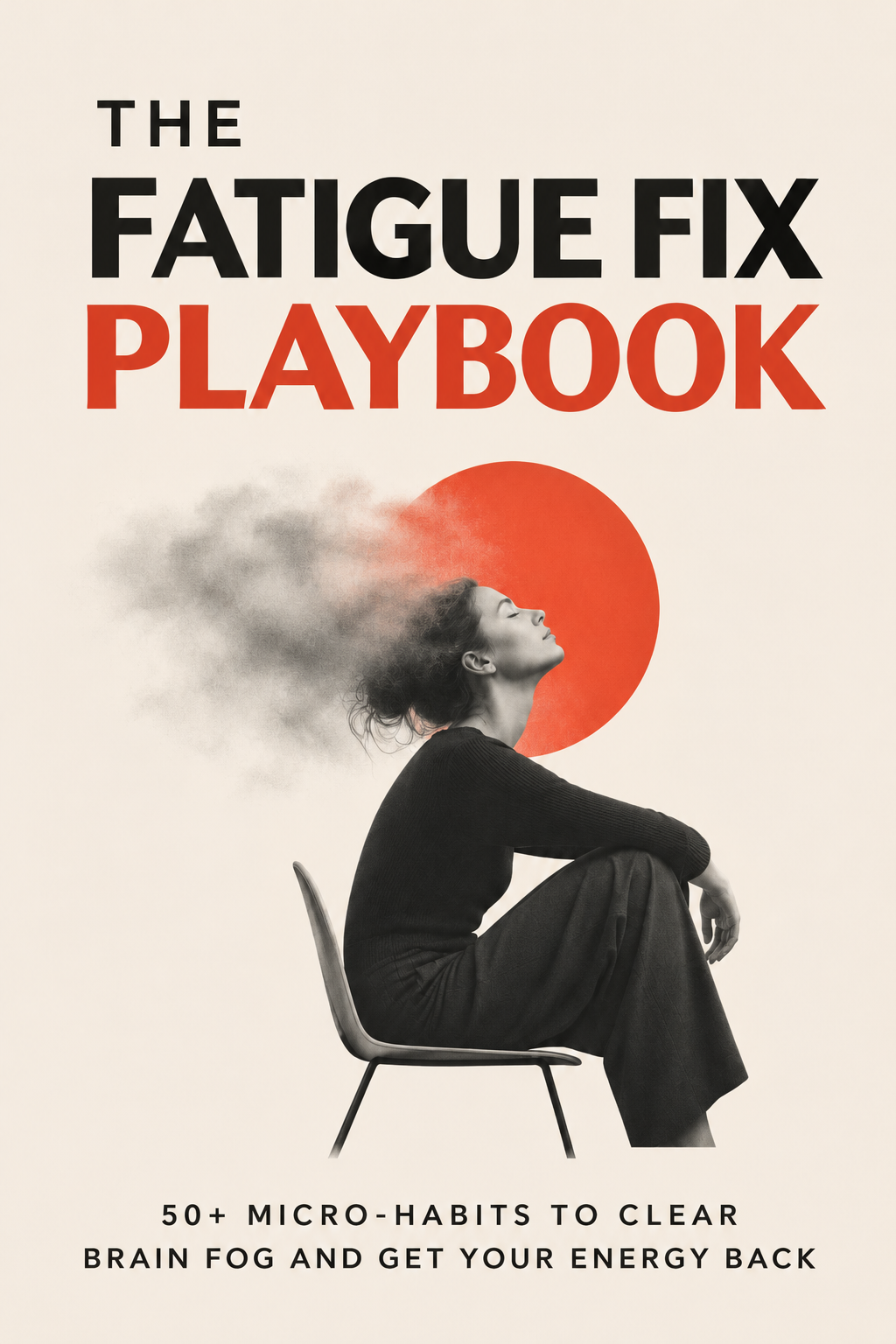
Interactive Digital Edition
Secure checkout on Selar. All worksheets included.
Download the complete guide and begin with the Personal Energy Audit whenever you’re ready.
A FEW THINGS YOU MIGHT BE WONDERING
No. The playbook encourages you to choose up to three habits that fit your circumstances. You may decide that starting with just one is more manageable.
No. This edition is a downloadable digital guide in PDF format. You can read it on a compatible device and print selected worksheets. The book images on this page are illustrative mockups of the digital edition.
Yes. The toolkit includes interactive fields and checkboxes. For the best experience, use a PDF reader that supports fillable forms, such as Adobe Acrobat.
No medical outcome is promised. Fatigue and difficulty concentrating can have many causes. This guide is intended for general education and everyday self-management, not diagnosis or treatment. Persistent, new, worsening, or disruptive symptoms should be discussed with a qualified healthcare professional.
Absolutely. You can start with the audit and go directly to the habit categories most relevant to your observations.
ONE SMALL STEP IS STILL A START.
You don’t need to turn your life upside down tomorrow.
You don’t need to complete fifty habits. You don’t need a perfect week.
You can begin by understanding your current routine
and choosing one manageable change.